Global IT services firm Endava has embedded AI agents throughout its software development process, from requirements gathering to deployment. The move signals a shift from AI as a coding assistant to AI as an autonomous workflow participant.
OpenAI is repositioning Codex beyond developers, adding Sites for shareable interactive dashboards, extended Annotations for documents, and curated plugins for sales, finance, and legal teams. With 1 million knowledge workers already using the platform weekly, this marks a direct challenge to Anthropic's Claude Cowork.
Single-turn safety benchmarks don't predict real-world vulnerability. Cisco's testing of 15 frontier models reveals that iterative attacks succeed up to 88% of the time—even against models that look secure in standard evaluations.
Learn to build a production-ready Retrieval-Augmented Generation system from scratch. We'll combine LangChain's RAG framework with Pinecone's vector database to create an AI assistant that answers questions from your documents with source citations.
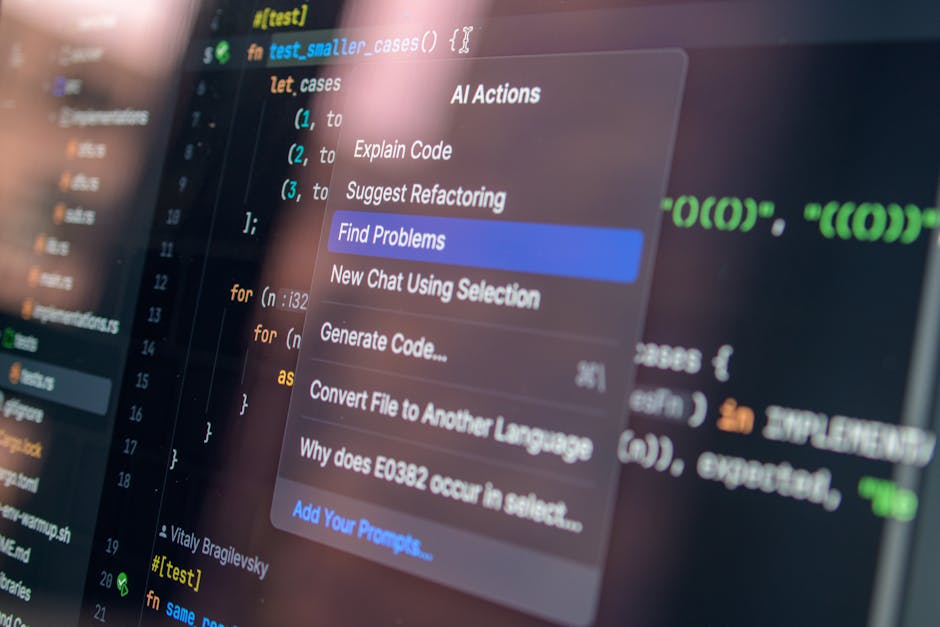
Learn to build an autonomous coding agent that can read, write, and modify code files using OpenAI's function calling API. This hands-on tutorial walks through creating a self-directing agent that handles real development tasks with minimal human intervention.
Google's new Gemini 3.5 Flash model is matching or beating flagship models from OpenAI and Anthropic in several benchmarks—while delivering tokens 4x faster at a fraction of the cost. The performance gap between 'fast' and 'frontier' models is closing.
An in-depth comparison of Anthropic's Claude Opus 4.5 and OpenAI's GPT-5 across coding, reasoning, creative writing, and real-world application performance.
While Elon Musk battles Sam Altman in federal court, he just rented his entire Memphis AI supercomputer to Anthropic. The deal exposes how compute capacity—not model performance—now defines competitive advantage in frontier AI.
OpenAI just released a Chrome extension that connects Codex directly into your browser, allowing agents to work across authenticated sessions and multiple tabs without commandeering your desktop. This moves AI agents closer to where modern work actually happens.
OpenAI's approach to running Codex safely isn't just about one code-generation model—it's a template for how AI labs must deploy increasingly capable systems. The three-layer framework they developed combines technical safeguards, operational controls, and external oversight in ways that scale beyond code generation.
OpenAI just released GPT-Realtime-2, bringing GPT-5-level reasoning to voice interactions with a 4x larger context window. The update includes two specialized models for translation and transcription, signaling a push toward voice-first AI applications.
OpenAI released GPT-5.5 Instant, an incremental update focusing on conversational quality, reasoning accuracy, and user personalization. The model targets real-world deployment needs rather than raw benchmark gains.
OpenAI's achievement in delivering sub-250ms voice responses isn't just an engineering feat—it's evidence we've crossed a fundamental threshold. For the first time, the limiting factor in human-AI conversation is human processing speed, not computational latency.
OpenAI has released Symphony, an open-source specification designed to standardize how AI agents coordinate and communicate. The move signals a strategic shift toward interoperability in multi-agent systems, potentially reshaping how developers build complex AI workflows.
OpenAI has released GPT-5.5, marking a significant iteration in large language model capabilities. The model introduces enhanced multimodal reasoning, extended context windows, and improved computational efficiency without requiring architectural overhaul.
OpenAI has confirmed a security incident involving compromised developer credentials from the Axios HTTP library. The breach affects a subset of ChatGPT users, marking a concerning reminder of supply chain vulnerabilities in AI infrastructure.
OpenAI has opened research preview access to Codex Security, an AI system designed to automatically detect security vulnerabilities in code. The tool extends OpenAI's Codex technology into application security, targeting a market desperate for automated vulnerability detection.
OpenAI has released GPT-5.4, the first significant update to its GPT-5 architecture. The model promises enhanced reasoning capabilities and reduced response times without the infrastructure overhaul that marked the GPT-4 to GPT-5 transition.
OpenAI just removed the paywall between free users and its most powerful publicly available model. ChatGPT free tier now includes GPT-4o access, Advanced Voice Mode, and canvas editing tools—features previously locked behind the $20/month Plus subscription.
GPT-5.2 identified a pattern human physicists missed, conjectured a formula for gluon scattering amplitudes, then proved it—marking a shift from AI as research tool to AI as research partner. The result challenges a decades-old assumption about particle interactions.
OpenAI has introduced Lockdown Mode and Elevated Risk labels to ChatGPT, marking a significant shift in how the platform handles security for journalists, activists, and other high-risk users. The new features aim to protect against sophisticated prompt injection and social engineering attacks.
OpenAI's GPT-5 has achieved a breakthrough in biotechnology by reducing the cost of cell-free protein synthesis through AI-optimized reaction conditions. The development could accelerate drug discovery and make synthetic biology more accessible.
OpenAI has released GPT-5.3-Codex, a code-focused model designed to outperform GPT-4 on programming tasks. The company claims 90% accuracy on the HumanEval benchmark and positions it as a direct competitor to GitHub Copilot and Anthropic's Claude for code generation.
OpenAI and Snowflake announced a strategic partnership bringing GPT models directly into Snowflake's data cloud platform. The integration eliminates data movement requirements and enables enterprises to deploy frontier AI on their existing infrastructure.
OpenAI and SoftBank have enlisted SB Energy to deliver renewable power for the Stargate AI infrastructure project. The partnership addresses the massive energy demands of advanced AI data centers with a focus on clean energy sources.